Crawl Space Drainage Solutions: The Complete Guide
Last updated: October 21, 2026
If a crawl space is taking on water, the real fix is usually interior perimeter drainage with a sump pump, plus grading and gutter work outside. Quick Answer: in most homes, the best crawl space drainage solutions combine source control, perimeter collection, and vapor control. A crawl space that stays damp after rain does not need “more ventilation” in most homes; it needs a system that collects water, moves it, and keeps vapor out of the dirt floor.
I write about building enclosure and moisture problems, and this topic lives at the intersection of drainage, humidity control, and foundation repair. The complete guide to Crawl Space Drainage Solutions shows why the wrong move is expensive: many owners pay for a dehumidifier before they solve bulk water entry, then wonder why the crawl space still smells like a wet basement.
Key takeaways
- Water in a crawl space is usually a collection problem, not a “dry it with fans” problem.
- The most reliable setup is often interior drainage + sump pump + vapor barrier, with exterior grading and gutters reducing the load.
- Exterior drains can help when surface water is the main issue, but they are not always practical around older foundations or tight lots.
- A dehumidifier controls humidity; it does not move standing water.
- If you have active seepage, rotted joists, or mold on framing, the drainage plan should be coordinated with a foundation or waterproofing contractor and, when needed, a structural professional.
- The right solution depends on whether the water enters after rain, through the soil, from poor downspout discharge, or from a high water table.
What is actually getting your crawl space wet?
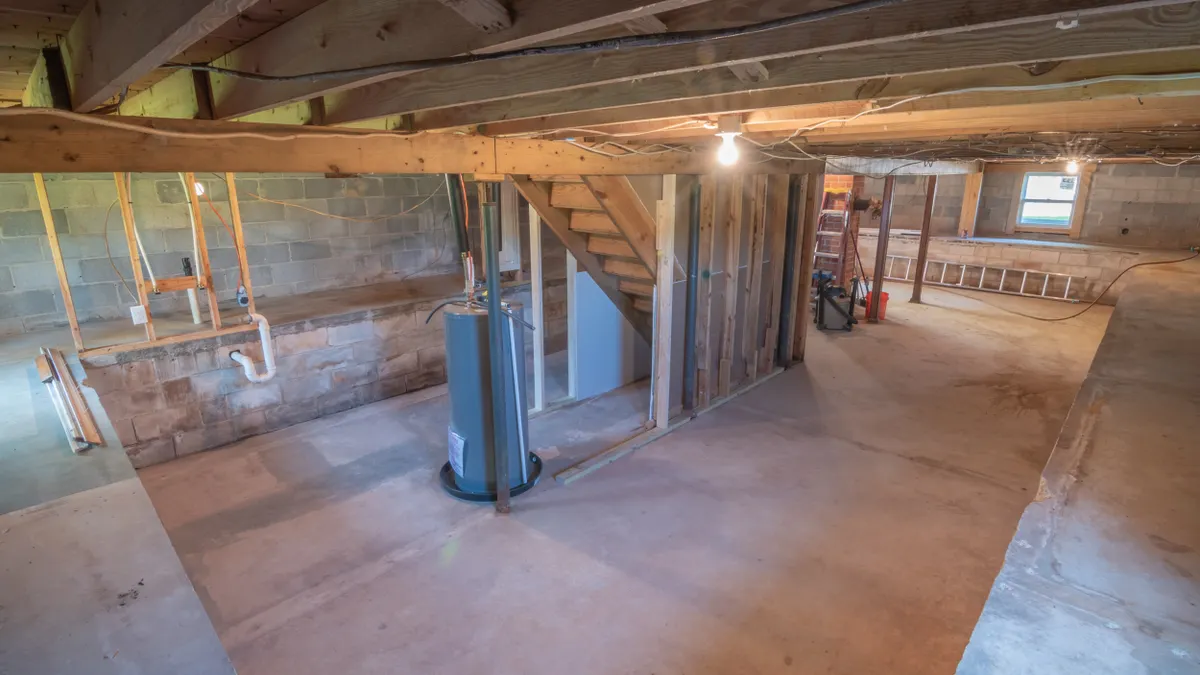
The answer is usually one of four things: roof runoff, surface runoff, groundwater seepage, or plumbing leaks. A crawl space drainage plan only works when it targets the source, because the same wet floor can come from very different paths.
Roof runoff is the easiest to miss. A downspout that dumps water beside the foundation can overload a crawl space after a 20-minute storm even if the yard looks dry the next day. Surface runoff shows up when the lot slopes toward the house or when gutters overflow at the corners. Groundwater seepage often appears as damp soil, puddles after long rain, or water entering through the cove joint where the footing meets the wall. Plumbing leaks are different: they can keep one area wet even in dry weather, and they often show up around supply lines, drain lines, or HVAC condensate.
This distinction matters because the best drainage fix changes with the source. A downspout extension and regrading may solve a runoff problem for far less than a full drainage system. A sump pump alone may not help if the crawl space is flooded by splashback from short gutters. And a vapor barrier will not stop liquid water entering through a cracked wall or a high water table.
The most common mistake is to treat all crawl space moisture as the same, so consult a professional if you are not sure which source is active. A damp soil smell after rain points toward drainage. Condensation on framing in mild weather points toward air leakage and humidity. Standing water points toward collection and removal. The wrong diagnosis leads to the wrong contractor, and the wrong contractor leads to the wrong bill.
Exterior drainage or interior drainage: which one solves the problem better?
Interior drainage wins for many crawl spaces because it is easier to install, easier to maintain, and less disruptive than excavating around the whole foundation. Exterior drainage wins when the site lets water be intercepted before it reaches the wall and when the house is already being excavated for other work.
Here is the practical split: if the crawl space is under a finished home, exterior excavation can be messy, expensive, and hard to complete correctly around porches, decks, utilities, and landscaping. Interior drains, by contrast, can be placed along the perimeter inside the crawl space, tucked beside the footing, and directed to a sump basin. They catch water after it enters and move it out before it spreads across the floor.
Exterior systems still have a place. A curtain drain upslope can intercept hillside runoff. Properly placed footing drains can relieve hydrostatic pressure against the foundation wall. In some cases, exterior waterproofing is the right answer when wall leakage is severe and access is straightforward. But a generic “waterproof the outside” pitch often ignores the realities of the site. If the lot is tight, if utilities are packed near the house, or if a patio sits against the wall, exterior work becomes harder and more expensive to do well.
The drawback of interior drainage is obvious: water may still enter the foundation wall or footing before it is collected. That means the crawl space still needs a clean vapor barrier, good grading outside, and proper pump discharge. Interior systems also depend on electricity, so battery backup becomes a serious consideration in outage-prone areas.
The right call is usually this: choose interior drainage when you need the most practical path to a dry crawl space without rebuilding the yard; choose exterior drainage when the site is open enough to make full interception realistic and the problem is clearly driven by outside water.
The drainage solutions that matter most in a crawl space

The most important crawl space drainage solutions are usually not one product; they are a sequence of parts that work together. The core options are gutters and downspouts, grading, French drains or curtain drains, interior perimeter drains, sump pumps, and vapor barriers. Each one solves a different part of the water problem.
Gutters and downspouts come first because they remove roof water before it hits the soil. A downspout extension that carries water away from the foundation can eliminate a surprising amount of crawl space seepage. This is the lowest-cost fix in many cases, and it should never be ignored just because it is simple.
Grading is next. Soil that slopes toward the home pushes stormwater toward the foundation line. Regrading the perimeter so water moves away from the house reduces the load on every other system.
A French drain or curtain drain works best when surface water needs to be intercepted upslope or along a boundary before it reaches the foundation. These drains are not magic; they need a proper outlet, correct slope, and filtration fabric so they do not clog with silt.
Interior perimeter drains are the workhorse for many crawl spaces. They collect seepage at the perimeter, move it to a sump basin, and discharge it away from the home. In a lot of older homes, this is the most dependable path to a stable crawl space.
A sump pump is the engine of the system. Without it, a perimeter drain becomes a holding trench. A pump with a check valve, a solid discharge route, and ideally a backup power source is what turns collected water into removed water.
A vapor barrier is not a drain, but it is part of the drainage package because it blocks ground moisture from evaporating into the crawl space. On a dirt floor, a 6-mil barrier is a bare minimum in many building practices, while a thicker reinforced liner is often used in encapsulation work. The barrier does not solve flooding; it reduces humidity and soil vapor after the water path is controlled.
The best crawl space drainage solutions layer these pieces. The weak setup is to install one component and expect it to perform a job it was never designed to do.
Interior perimeter drains and sump pumps: when they win
Interior perimeter drains and a sump pump are the best choice when the crawl space gets water after storms, when the foundation is hard to excavate outside, or when you need a system that can be maintained from inside the house. They are the most common practical answer for recurring seepage.
The strength of an interior system is predictability. Water that reaches the footing level is collected in a controlled path instead of pooling in random low spots. That matters because crawl spaces usually have plumbing, ductwork, and electrical runs crossing the area. Standing water under those systems creates bigger repair costs than the drainage work itself. An interior drain also pairs naturally with a vapor barrier and crawl space encapsulation, which can lower humidity and reduce the musty smell that so many owners first notice.
The weaknesses are just as real. First, the system depends on a sump pump, which means mechanical parts, power, and maintenance. A failed float switch or a blocked discharge line can put the crawl space right back where it started. Second, interior drainage does not stop wall leakage from occurring; it simply collects it. Third, if the crawl space has serious structural damage already, water management alone will not fix sagging beams, insect damage, or rot.
This option is for the owner who needs reliability more than aesthetics. It is also the better choice when the crawl space is low, cramped, or partly finished with difficult access around piers and HVAC equipment. Homes with repeat seepage after storms often fit this category.
It is not for the person hoping to solve a damp smell with a pump alone. If the real issue is condensation from unsealed vents or high indoor humidity, a sump pump can be a costly detour. It is also the wrong first move if a downspout is dumping water directly beside the foundation; in that case, the pump becomes a bandage for a simple exterior problem.
Exterior French drains, grading, and downspouts: where they win
Exterior drainage wins when the water problem is mostly coming from outside the house and the site allows water to be intercepted before it reaches the foundation. That makes it the right choice for surface runoff, hillside lots, and homes with enough access around the perimeter to do the work correctly.
A properly placed French drain or curtain drain can be highly effective when water runs toward the home from uphill. The drain intercepts water in the soil profile and sends it away before it saturates the foundation zone. Regrading the soil at the same time often improves the result because the yard and drain stop fighting each other. Downspout extensions are part of this same family of fixes. They are basic, but they are often the first and most important move.
The big advantage of exterior work is that it reduces water load before it enters the structure. That can protect the foundation wall and, in some cases, reduce hydrostatic pressure that would otherwise force water through cracks or joints. It also means less water reaches the crawl space in the first place, which is the cleanest possible outcome.
The downside is access and cost in the broad practical sense, not a precise number. Exterior drainage often requires excavation, landscaping repair, careful pipe placement, and attention to outlet routing so water does not simply move to a new problem spot. On older homes, tree roots, porches, steps, patios, and utility lines can make the work awkward. If the excavation is shallow, poorly sloped, or improperly filtered, the drain can clog and underperform.
This option is for the homeowner whose crawl space gets wet because the yard sends water there. It is also for the owner who wants to reduce foundation exposure, not just manage symptoms inside. It is not the best first choice when the home sits on a tight urban lot or when interior access is far simpler than opening the yard.
The honest side-by-side
Interior drainage is the better all-around fix for most recurring crawl space water problems, but exterior drainage wins when runoff control is the main issue and the site is open enough to handle excavation well. The table below shows where each option actually changes the decision.
| Criteria | Interior drainage + sump pump | Exterior drainage + grading | Winner for this condition |
|---|---|---|---|
| Best for recurring seepage after rain | Collects water at the perimeter and removes it before it spreads | Works if runoff is the source and the drain intercepts it early | Interior drainage |
| Best for hillside or upslope runoff | Can help, but only after water reaches the foundation | Intercepts water before it reaches the wall | Exterior drainage |
| Installation disruption | Usually less disruptive inside the crawl space | Often requires excavation and yard restoration | Interior drainage |
| Dependence on electricity | Yes, because of the sump pump | Can be passive if properly sloped | Exterior drainage |
| Protection of foundation wall from water load | Manages water after entry | Reduces water reaching the wall in the first place | Exterior drainage |
| Compatibility with crawl space encapsulation | Works well with vapor barriers and sealed vents | Helps, but does not create the same inside control | Interior drainage |
| Maintenance burden | Pump inspection, alarm checks, discharge line care | Drain and outlet cleaning, less mechanical upkeep | Exterior drainage |
| Best for homes with tight lot lines or obstacles | Fits cramped foundations more easily | Often difficult where access is limited | Interior drainage |
| Handling true groundwater pressure | Often the more practical answer under the home | Can help, but may be limited by site conditions | Interior drainage |
| First move for simple roof runoff problems | Usually too much system for the job | Downspouts and grading may solve it directly | Exterior drainage |
The table makes the central point plain: the best choice depends on where the water comes from and how hard it is to work around the foundation. The mistake is to buy the more expensive-looking solution and assume that means better. In crawl spaces, the right geometry beats the fancy pitch.
Which crawl space drainage fix should you choose?
Choose interior drainage with a sump pump if the crawl space gets wet after storms, if seepage is coming through the perimeter, or if the foundation is hard to excavate outside. Choose exterior drainage and grading if the main problem is surface runoff, a downhill lot, or roof water dumping beside the house. Neither if the problem is mostly condensation, high indoor humidity, or a plumbing leak that has not been found.
That is the clean answer. The deciding factor is not how bad the smell is or how old the home is. It is the source of the water and the practicality of intercepting it before or after entry.
Interior drainage is the safer default for many older homes because it is less disruptive and easier to pair with encapsulation. It is also the more realistic answer when the crawl space is low, the exterior is crowded, or the owner wants a controlled, maintainable system under the house. Exterior drainage is the better call when the home is taking the brunt of yard runoff and a good outlet can be built without creating a new drainage headache.
A lot of companies will push one system as if it were universal. It is not. A sump pump does not solve bad grading. A French drain does not solve a broken discharge line. A vapor barrier does not solve standing water. The right crawl space drainage solution is the one that addresses the actual path of water, not the one that sounds most complete in a sales pitch.
When the verdict flips: the exceptions that matter
The overall recommendation changes in four situations, and these are common enough to deserve their own callout.
First, if the crawl space is flooded by plumbing or HVAC condensate, drainage around the foundation is the wrong first spend. A leaking supply line, failed condensate drain, or overflowing dehumidifier pan needs diagnosis before any trenching starts.
Second, if the lot is steep and the house sits below uphill runoff, exterior interception can be the best first move. A curtain drain upslope or a properly regraded swale may outperform an interior system because it attacks the water before it loads the wall.
Third, if the home already has chronic electrical outages or a sump pit with no backup, an interior system loses appeal unless a battery backup or generator plan is part of the design. A drain that relies on a pump is only as good as the power behind it.
Fourth, if the crawl space is dry except for high humidity and mild condensation, the right answer may be a vapor barrier, sealed vents where appropriate, and dehumidification rather than a full drainage system. That is a smaller fix, and in the right case it is the correct one.
These exceptions do not weaken the main verdict. They sharpen it. Crawl space drainage is not about buying the biggest system. It is about matching the water path with the shortest reliable route out.
What a good crawl space drainage plan should include
A good plan should include source control, water collection, water removal, and moisture control. If one of those parts is missing, the system is incomplete.
Source control means gutters, downspouts, extensions, and grading that keep unnecessary water away from the foundation. Water collection means a drain path that catches seepage or runoff where it enters the problem area. Water removal means a sump pump or a gravity outlet that actually discharges water away from the house. Moisture control means a vapor barrier, proper crawl space sealing, and, in many homes, a dehumidifier sized for the space rather than the house above it.
The best plans also account for maintenance. A sump pump should have an accessible basin. The discharge line should be protected from freezing and backflow. The crawl space entry should allow inspection without tearing up the barrier. The vapor barrier should be continuous and lapped correctly, not just draped over the dirt like a tarp.
A plan that ignores maintenance is a plan that ages badly. A crawl space is not a one-time project; it is a system that has to keep working in wet weather, in cold weather, and when nobody is thinking about it.
The final call
Interior perimeter drainage with a sump pump is the better default for most wet crawl spaces. Exterior drainage and grading are the better answer when the site clearly sends water toward the foundation and there is enough access to intercept it cleanly.
If the crawl space is wet because of roof runoff, start outside with gutters, downspouts, and grading. If the crawl space is wet because water enters through the perimeter or footing area, a drain and pump system is usually the most dependable fix. If the floor is dry but the air feels clammy, pause before trenching and look at humidity, vents, and vapor control instead.
That is the decision tree that saves money: stop unnecessary water first, collect unavoidable water second, and control humidity last.
Drafted with AI; not yet reviewed by a person.